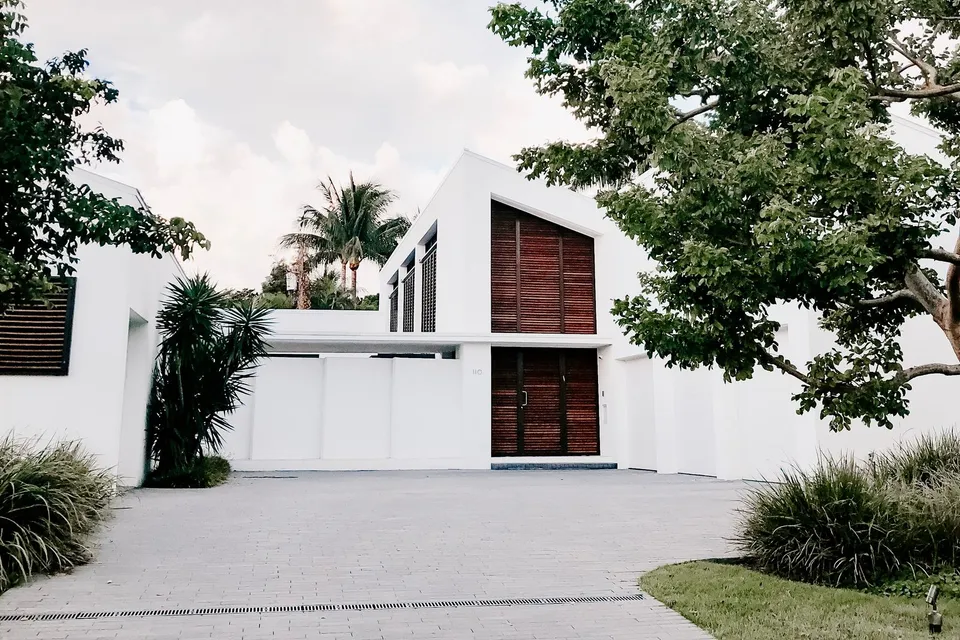
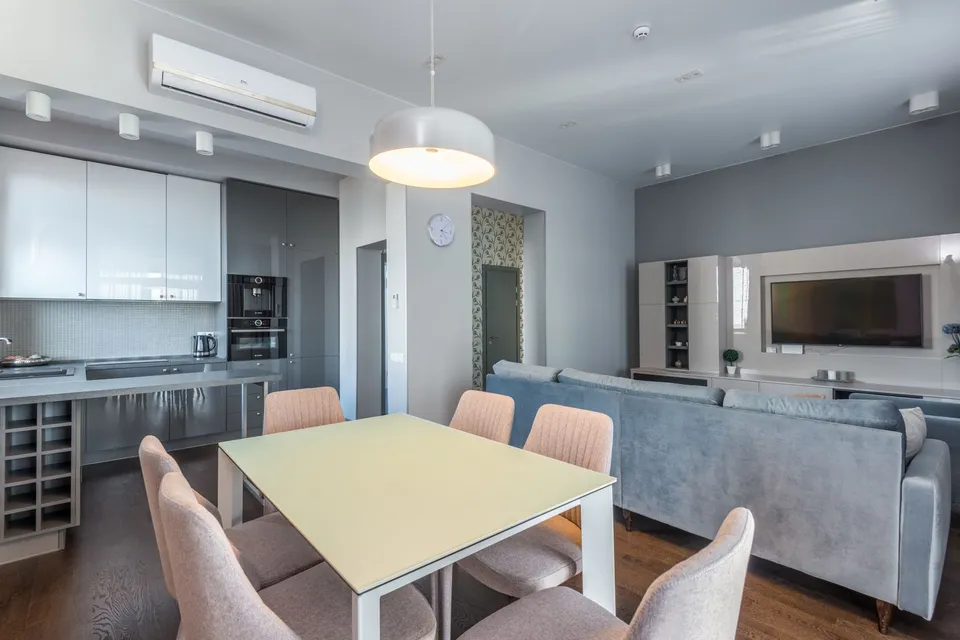
Two viewings, one weekend.
A condo close to your office.
A house and lot with a yard, farther out.
You liked both, for different reasons.
On the drive home, you still couldn’t pick.
Each one answers a different question about your life.
There are five of those questions, and they don’t weigh the same.
This guide shows you which one decides.

The short answer
The five are lifestyle, family stage, budget, work location and long-term plans. Your income, your job and your timeline set budget, work location and long-term plans, so those three narrow the field. Lifestyle and family stage tell you what you want, so they choose from what’s left.
Family stage is the one that moves. On the 1-bedroom below, the downpayment alone runs 60 months. Your household at the end of it may not be the household that reserved.
It isn’t your fault if nobody put it that way. Most advice sorts buyers by life stage, and life stage is the factor that changes while you pay.
If you’d like the full side-by-side first, from ownership to resale, start with the house and lot vs condominium guide.
Lifestyle: how your week actually runs
Start with an ordinary Tuesday and an ordinary Sunday, not the ones you’d like to have.
A condo gives you a building that runs around you. The building handles security, cleaning, backup power and the pool or gym, and your monthly association dues pay for it. What it asks in return is shared living. The building’s rules cover things like pets and renovation hours. You pay the dues whether you use the amenities or not. And you share walls, floors and ceilings with your neighbors.
A house and lot gives you space and decisions of your own. A yard, a door at street level, no shared walls unless it’s a townhouse or a duplex, and room to change the house within the subdivision’s restrictions and a building permit. What it asks in return is the work. The upkeep a building would have done is yours, from the roof and the gutters to the garden. You pay for each repair as it comes.
The check: write down what you’d happily pay someone else to handle, and what you’d rather control and do yourself. Add anything that needs room or makes noise, like a dog or a hobby. Then ask for the rules that would apply to it, in writing: the building’s house rules for a condo, the subdivision’s restrictions for a house and lot. Either set can limit what you’re planning, and you want to know that before you reserve.
This points toward a condo when you’d rather pay to have the upkeep done, and you’re comfortable living by shared rules. It points toward a house and lot when you’d rather have the space and the say, and you’re ready to do the upkeep that comes with them.
Family stage: who lives with you, now and at turnover
The usual advice here is a list: a condo while you’re single, a house and lot once the kids come. It’s a fair place to start. It can’t finish the job, because it’s built on the household you have the day you read it.
So count the people. Then count them again for the day you’d get the keys, and for ten years after that.
Ask who else might move in. A parent who needs to be closer. A relative studying in the city. A household can grow with parents and relatives, not only with children, and each one changes how many rooms you need.
Here’s the range of sizes on two current Cebu tower price lists:
| Unit type | Floor area |
|---|---|
| 1-bedroom | 39.29 to 57.91 sqm |
| 2-bedroom | 66.83 to 96.74 sqm |
These figures are the developer’s own, from its current price lists for both towers.
A house and lot gives you the lot as well as the floor area, and room to build into later, within the subdivision’s restrictions, a building permit and your own budget for the work. A condo unit’s size is fixed the day you buy it, so you choose it up front, for the household you expect at turnover.
Then put the timeline next to the people. Every preselling price breakdown says how many months the downpayment runs. Find that line on any sheet you’re handed, and count your household forward by it. On the 1-bedroom under Budget, it’s 60 months. A child who’s 3 when you reserve is 8 by the last installment. A parent who’s 62 is 67.
This points toward a condo when your household is settled in size and the bedrooms you need at turnover are the bedrooms on the floor plan. It points toward a house and lot when your household is still growing, in either direction, and you want room to add.
Budget: the monthly after the downpayment
Here’s that 1-bedroom in full: 39.29 sqm in Mactan, from one of the preselling projects I currently represent.
| List price, 1-bedroom | ₱8,252,900 |
|---|---|
| Transfer and registration charges | ₱660,232 |
| Total contract price | ₱8,913,132 |
| Promo discount, this payment option | (₱50,000) |
| What you’d pay in all | ₱8,863,132 |
These figures are the developer’s own, from its current price list for this tower. Both prices and availability move.
The total contract price, or TCP, is the full amount you’re agreeing to pay, charges included. On this payment option, a ₱50,000 promo discount comes off it. The transfer and registration charges are 8% of the list price. I worked out that 8% myself.
| Stage | Amount | How |
|---|---|---|
| Reservation fee | ₱50,000 | On reservation |
| Downpayment, 2% | ₱127,500 | 3 months × ₱42,500 |
| Downpayment, 8% | ₱712,500 | 57 months × ₱12,500 |
| Balance | ₱7,973,132 | Through bank financing, paid in full before you can move in |
| Total | ₱8,863,132 |
These figures are the developer’s own, from the same price list. I worked out the shares below myself.
Developers call those downpayment years the equity phase. Over them, you’d pay ₱890,000, or 10% of what you’d pay in all.
The other 90% is the balance.
Unless you pay it in cash, it becomes a bank loan. That step is called loan takeout: a bank pays the developer, and you start paying the bank. The rate isn’t on the developer’s price list, so here are three example rates:
| Rate | 10 years | 15 years | 20 years |
|---|---|---|---|
| 6% | ₱88,518 | ₱67,282 | ₱57,122 |
| 8% | ₱96,736 | ₱76,195 | ₱66,690 |
| 10% | ₱105,366 | ₱85,680 | ₱76,942 |
Monthly payment on a ₱7,973,132 loan, computed as a standard monthly amortization. These are example rates. They aren’t a quote from any bank.
The rate you’d be offered depends on a bank’s review of your application, so nobody can tell you it in advance. What the table shows is how far the rate and the term move the monthly. The gentlest row, 6% over 20 years, is ₱57,122 a month. That’s about four and a half times the ₱12,500 you’d pay during the downpayment. The longer term lowers the monthly and raises the total: at 8% over 20 years, the loan costs ₱16,005,713 in all, about twice what you borrowed. And a bank still decides whether to lend it at all.
Then there’s the cost of moving in and running the home. The price list names what it leaves out:
- Move-in charges
- Connecting electricity, water, telephone and internet
- Association dues
- Loan-release charges, such as fire insurance and mortgage redemption insurance
It puts no figure on any of them. And you can’t move in until the full price, the utility charges and the loan charges are paid. Dues go by the size of the unit, so a bigger unit pays more every month. A house and lot swaps most of the dues for repairs you pay yourself, plus homeowners’ association dues where the subdivision has one.
To compare, ask for the same breakdown on any house and lot you’re weighing, taken all the way to the bank-loan monthly. Then the two sit side by side on the same terms.
This one doesn’t point toward a type. It decides which homes of either type are on the table.
Work location: where your weekdays are
Ask three things. Where do you spend your weekdays? How many days a week do you actually make the trip? And at what hour?
A commute is paid in hours, and the hours add up over the years you’ll own the home. I’ve worked through what 30 extra minutes each way comes to in the house and lot vs condominium guide. Put your own drive into it, timed at the hour you’d really leave.
Then add the other daily trips: school, your parents’ house, the hospital you’d use. A home that’s close to work and far from everything else may not save the time you think. And check the actual address before the type. Condos sit more often in the center and subdivisions farther out, but a subdivision near your daily places can beat a tower across town on this factor.
This points toward a condo when most of your days end at the same central place and a short trip is worth more to you than floor area. It points toward a house and lot when you make the trip fewer days a week, or your daily places sit outside the center.
Long-term plans: how long you’ll stay, and what comes after
Two questions about time. When do you need to move in? And how long do you plan to stay?
If you need to live in it soon, preselling is out: its keys come at turnover, years from now. Look first at ready-for-occupancy homes, the ones already built, of either type. When preselling and RFO each make sense goes through the timing in full.
If you can wait, think past the keys. Will you stay, rent it out, sell it, or pass it on? Each answer asks something different of the property.
“The Bottomline is: Life is Unpredictable… Kukuha ng Property, payable for 15 years but then suddenly lost their job / income within 5 years… the best purchase is the one you can purchase outright. If you cannot purchase outright, then don’t buy it.”
Comment on a Philippine property video
The bottom line is: life is unpredictable. People take on a property payable over 15 years, then suddenly lose their job or income within five years. The best purchase is one you can buy outright. If you can’t, don’t buy it.
Not every buyer can pay outright, and the comment doesn’t have to be the whole rule. The question in it is a fair one, though: could you keep paying through a year your income dips?
Resale works differently for each type, and neither is simply easier. A condo competes with every similar unit in its building: a buyer can price it quickly, and another seller can undercut it just as quickly. A house and lot competes with fewer exact matches, and its land holds value while the house itself ages and appraises lower year by year. Before you reserve, look at how many homes like yours are listed for resale or rent in that building, or in that subdivision, because those are the homes yours would compete with when you sell.
This points toward a condo when location matters most for the years ahead, and the resale and rent listings in that building hold up. It points toward a house and lot when you’re staying a long time, want value held in land, and the resale listings in that subdivision hold up.
When the five disagree
Sort them by the job each one does:
| Factor | What it tells you | Its job |
|---|---|---|
| Budget | What you can carry at the bank stage | Narrows the field |
| Work location | Where you need to be on most days | Narrows the field |
| Long-term plans | When you move in, and how long you stay | Narrows the field |
| Lifestyle | How you want to live | Chooses from what’s left |
| Family stage | Who lives with you at turnover and after | Chooses from what’s left |
Then try this on paper:
- Write one line for each factor, in your own words.
- Rank the five, from the one you’d give up last to the one you’d give up first.
- Circle the one you’d never trade.
If you circled budget, work location or timing, let it narrow the field, and let the rest choose. If you circled lifestyle or family stage, that’s a fair answer too. Then check it against the three that narrow: can your budget carry a home that gives you that, within reach of where you need to be?
If it’s still a tie
Let the bank-stage monthly break it. Price the best condo and the best house and lot on your list to the bank loan, side by side. Two real monthlies give you something firmer to decide on than a list of pros and cons.
Or plan it in order: one type now, the other later. The order can run either way. The plan rests on what you do with the first home when you move, so run the resale and rent check from long-term plans on that building or that subdivision before you choose it.
What I think
A condo gives you a place in the middle of things, and a building that carries the shared upkeep. A house and lot gives you room, a say over your own walls, and land that keeps its value as the house ages. Each one keeps something the other gives up, and I have no preference between them for you. That has to come from your five answers.
Still, I think family stage is the weakest of the five to decide on. It is the one that changes while you are still paying. On the 1-bedroom above, five years pass between the reservation and the balance.
The test takes a pen and a minute. Write down who will be living in the home on the day the balance falls due.
If that list matches the people at home today, family stage is safe to lean on. If it does not, let budget, work location and timing narrow the field first, and let the list you wrote choose from what is left. Both answers give you a choice you can explain to the people on it.
This doesn’t fit if a yard or an amenity deck is doing the deciding. On the 1-bedroom above, the bank-stage monthly starts at ₱57,122 at the gentlest example rate, and it can go higher. And don’t choose for the household you have today. The one that moves in at turnover is five years older than the one that reserves.
When a buyer brings me a unit, I take its numbers past the downpayment to the bank-loan monthly, as I did with the 1-bedroom here, so you answer the budget question with the real figure before weighing the other four.
Questions
Is a condo big enough for a family?
It can be, if the bedroom count fits the household you’ll have at turnover. What it can’t do is grow with you, because the size is fixed the day you buy. On two current Cebu tower price lists, 1-bedrooms run 39.29 to 57.91 sqm and 2-bedrooms 66.83 to 96.74 sqm. Count the bedrooms you’ll need at turnover, and read the floor plan room by room, because a price list gives only the bedroom count and the area, not where the closets and the laundry go.
What if my partner and I rank the five differently?
Rank them separately, then compare what you each circled. If it’s the same factor, start there. If it isn’t, run the budget check first: a home neither of you can carry at the bank stage is off the table for both, and that narrows the argument before you have it.
Can I buy one type now and switch to the other later?
Yes, in either direction. Decide now what the first home becomes when you move: sold, rented out or kept. Each one asks something different of it: buyers who want that building or subdivision, tenants who’ll pay what you need, or a place you’d still want to own.
Is a house and lot more work to keep up?
Yes, in hours and in repairs you pay as they come: the roof, the gutters, the walls, the fence. A condo moves the shared parts into dues, which you pay every month whether anything breaks or not. Add up both over the years you’ll stay before you call either one cheaper.
The one thing to take with you
Let what can’t move decide. Let what you want choose from what’s left.
After two viewings, it’s natural to think a third will settle it. Another home can’t answer a question you haven’t asked yet. Your five lines can.
Before your next viewing, show your five lines to the people who’ll live there with you, and ask which one they’d circle. And if my numbers above don’t hold against your own bank’s, tell me.
A home that fits on the day you reserve has five years to stop fitting. Choose the one that still fits on the day you get the keys.
If you’d like a condo or a house and lot you’re weighing up worked through the same way, send me a message on Messenger. You don’t have to be my client for that.
Message me on Messenger